


What is Ganache? The Connoisseur’s Guide to Chocolate’s Most Opulent Form
What if the difference between a simple sweet and a masterpiece of edible art lies in the silent precision of a molecular bond? You likely recognize that true luxury resides in the details, yet even the most seasoned connoisseurs often mistake a generic frosting for the velvet complexity of a true ganache. It's a common frustration to seek a deep, sensory experience only to be met with textures that fail to hold their integrity against the 42 degree Celsius peaks of a Dubai summer afternoon or lack the nuanced depth of a bespoke creation.
We'll bridge the gap between mere confectionery and artisanal mastery by exploring the science behind this opulent chocolate emulsion. You'll learn to identify the hallmarks of a curated, hand-whipped treasure and understand the technical demands of maintaining quality in the UAE climate. This guide serves as your invitation to master the art of selecting and storing these exquisite treats, ensuring every bite remains a celebratory experience of pure provenance and technical perfection.
Key Takeaways
- Understand the delicate science of the emulsion to achieve that signature contrast between a crisp chocolate shell and a velvet-smooth center.
- Master the precise chocolate-to-cream ratios required to transform a basic ganache into a versatile masterpiece, from pourable glazes to structured truffles.
- Discover the art of aromatic infusion, where traditional French techniques meet the rich, evocative flavors of the Middle East to create bespoke confectionery.
- Learn the essential temperature protocols for preserving artisanal chocolate in the UAE’s desert climate to prevent blooming and maintain an opulent finish.
- Explore the professional secrets behind crafting multi-tiered wedding cakes and airy whipped frostings that exude high-end sophistication.
The Essence of Ganache: Defining Edible Luxury in Dubai
Ganache is the silent protagonist of the luxury dessert world. It's a delicate emulsion of high-quality chocolate and heavy cream, a pairing that seems simple yet requires absolute precision to master. In the high-stakes culinary scene of Dubai, where excellence is the minimum requirement, Ganache represents the pinnacle of chocolate craftsmanship. Its origins trace back to an accidental spill in a 19th-century French pastry shop, but it has since evolved into a global artisanal staple. This substance provides the foundation for the most exquisite truffles and tarts found in the Emirates.
The experience of tasting this preparation is a study in contrasts. You feel the initial resistance, the crisp snap of a tempered chocolate shell, followed immediately by the surrender of a velvet center. It's this transition from solid to silk that defines the Varak experience. In a city that celebrates the superlative, only a perfectly balanced emulsion can satisfy a discerning palate. The richness coats the tongue, offering a moment of pure, unadulterated indulgence that lingers long after the final bite.
The Anatomy of a Perfect Bite
A masterfully crafted ganache possesses a mirror-like shine that reflects its purity. It should maintain its structure at room temperature, yet the moment it touches the tongue, it must begin to dissolve. This happens because high-quality cocoa butter melts at roughly 37 degrees Celsius, which is the average human body temperature. Artisanal versions stand in stark contrast to mass-produced retail fillings. Those industrial alternatives often rely on vegetable oils or hydrogenated fats to achieve shelf stability, resulting in a waxy coating that refuses to melt elegantly. A true connoisseur looks for the clean finish that only pure cream and premium chocolate can provide.
Ganache vs. Mousse: A Study in Density
While they share a chocolate heritage, these two textures serve very different roles. This emulsion is a dense and rich marriage of fats and solids. Mousse, by contrast, is an aeration, defined by the introduction of tiny air bubbles to create a cloud-like lift. If you wish to explore the lighter side of this spectrum, consult The Connoisseur’s Guide to Mousse. Pastry chefs often choose the denser option for bespoke wedding cakes when they need structural integrity and intense flavor. Mousse is reserved for the delicate layers that require a fleeting, ephemeral quality. In the world of edible art, the choice between the two is a deliberate decision based on the desired emotional impact of the dessert.
The Architecture of an Emulsion: Ratios and Textures
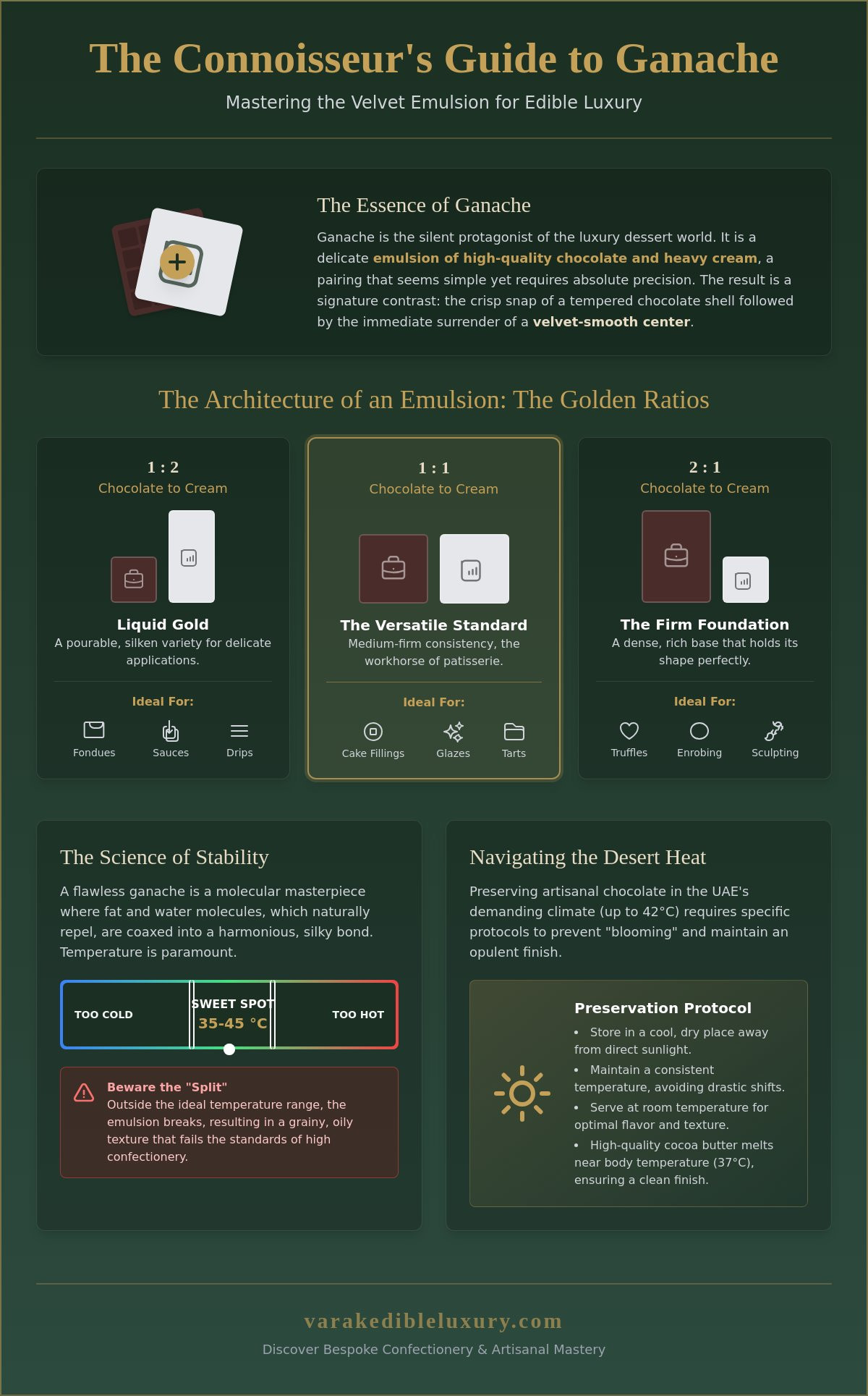
Creating a flawless ganache is an exercise in molecular precision. It is an emulsion, a delicate suspension where fat and water molecules, which naturally repel one another, are forced into a harmonious bond. When warm cream meets finely chopped chocolate, the cocoa butter melts and integrates with the liquid to create a texture that is impossibly silky. Achieving this requires a deep understanding of ganache ratios and textures, as even a minor deviation in temperature can cause the mixture to "split." A split ganache loses its luster and develops a grainy, oily residue that fails the standards of high confectionery. Expert chocolatiers maintain the mixture between 35 and 45 degrees Celsius to ensure the suspension remains stable and smooth.
To elevate the aesthetic, a touch of invert sugar or local honey is often introduced during the mixing process. This addition doesn't just provide a subtle floral depth; it creates a mirror-like gloss and extends the shelf life by retaining moisture within the structure. It's the secret behind that signature sheen seen in world-class patisseries.
The Golden Ratios of Confectionery
The character of your ganache depends entirely on the weight of its components. These ratios dictate whether the chocolate will stand firm as a jewel or flow like a silken ribbon. Precision is the difference between a truffle and a sauce.
- 1:1 Ratio: This is the versatile standard. It yields a medium-firm consistency perfect for filling artisanal layer cakes or creating thick, luxurious glazes that set with a soft bite.
- 2:1 Ratio: By doubling the chocolate content, the ganache becomes a firm foundation. This is the preferred ratio for hand-rolled truffles and enrobed chocolates that must hold their shape at room temperature.
- 1:2 Ratio: A higher cream content results in "liquid gold." This pourable variety is ideal for fondues or light drizzles over delicate pastries.
The Ingredient Pedigree: Couverture vs. Compound
True luxury begins with the purity of the source. Varak utilizes only premium couverture chocolate, defined by its high cocoa butter content of at least 31%. This high fat percentage ensures a clean, lingering finish that melts at body temperature, a hallmark of a curated dessert experience. The cocoa butter provides a structural integrity and a snap that lower-quality ingredients cannot replicate.
Avoid compound chocolates that substitute cocoa butter with hydrogenated vegetable fats. These imitations leave a waxy film on the palate and lack the complex flavor profiles found in single-origin beans. For a discerning palate in the UAE, where excellence is the minimum standard, the choice between artisanal couverture and mass-produced compound is the difference between a masterpiece and a mere confection. High-end ganache requires the honest expression of the bean to achieve its opulent potential.
Beyond the Classic: Infusing the Flavors of the Emirates
Ganache serves as a sophisticated blank canvas for the adventurous palate. At Varak, we treat the cream as a vital vehicle, using its high fat content to carry aromatic oils directly into the chocolate's molecular heart. We call this the Varak Signature. We blend traditional French emulsion techniques with the storied heritage of the Middle East to create something entirely bespoke. It’s a delicate dance of chemistry and culture. Our artisans focus intensely on ganache formulation and stability to ensure every batch remains flawless in the warmth of the Emirates. Such precision allows us to pair bold, local spices with delicate cocoa notes without overwhelming the palate.
Balancing these elements requires a master's touch. Strong aromatics like cardamom or cloves can easily mask the nuanced profile of a single-origin bean if not handled with restraint. We've spent years perfecting the ratios that allow both the spice and the silkiness of the chocolate to sing in unison. The goal isn't to hide the chocolate, but to elevate it through a regional lens.
Saffron and Mawa: A Royal Pairing
We steep premium saffron threads in warm, velvety cream to extract a honeyed aroma and a brilliant golden hue. To add traditional weight, we incorporate Mawa, which are milk solids reduced until they reach a rich, dense consistency. The resulting fudge-like density feels deeply nostalgic for UAE residents. Honoring the desert's royal history, this pairing offers an earthy, floral profile that remains a staple of our luxury collection.
Rose and Pistachio: The Floral Frontier
Damascus rose water brightens the dark chocolate ganache, adding a layer of floral sophistication that lingers on the palate. We contrast this smoothness with the assertive crunch of roasted Iranian pistachios. These emerald gems provide a vital textural counterpoint to the soft emulsion. For those seeking deeper insights into these pairings, explore The Connoisseur’s Guide to Dark Chocolate in Dubai.
Every creation is finished with our namesake: 24-karat edible gold leaf. Applying gold isn't a mere decoration; it's a commitment to artisanal integrity. The gold leaf, or Varak, catches the light of a Dubai evening and emphasizes the glossy surface of the chocolate beneath. It transforms a simple dessert into a piece of edible art. Our final touch is what elevates these offerings from confectionery to treasures, making them the perfect gift for those who appreciate the intersection of history and contemporary luxury. It’s a sensory experience that begins with the eyes and ends with a lingering, sophisticated finish.
From Glazes to Truffles: Ganache in Bespoke Confectionery
Ganache serves as the architectural backbone for the most ambitious confectionery designs in Abu Dhabi. While its origins are humble, its application in bespoke wedding cakes is anything but simple. Master pâtissiers rely on a high-ratio chocolate ganache to provide structural integrity for multi-tiered masterpieces. This dense layer acts as a thermal barrier, a necessity in the UAE climate, ensuring the cake remains pristine from the atelier to the ballroom. For those seeking a lighter touch, the whipped technique transforms the emulsion into a cloud-like frosting. By aerating the mixture as it cools, chefs create a texture that rivals traditional buttercream but retains the intense flavor profile of premium cacao.
The enrobing process represents the height of artisanal precision. Here, chilled ganache centers are meticulously dipped into tempered chocolate. This creates a signature snap that yields to a velvet interior, a sensory contrast that defines the luxury truffle experience. In the world of corporate gifting, these confections are more than just sweets; they're tokens of prestige. A gift hamper featuring hand-rolled truffles communicates a level of detail that mass-produced chocolates simply can't match. It's a statement of taste that resonates deeply within the professional circles of the Emirates.
The Wedding Cake Foundation
In high-end cake design, ganache is the gold standard for the 'crumb coat.' Unlike buttercream, which can be temperamental under heavy fondant, ganache sets with a firm, stone-like finish. This stability is vital for achieving the razor-sharp edges required for 24k gold leaf application or intricate lace stenciling. It's the silent partner in every grand celebration, providing the canvas for The Connoisseur’s Guide to the Finest Cakes in Dubai. Without this structural foundation, the most elaborate designs would lose their poise before the first toast.
The Artisanal Chocolate Box
Each Varak chocolate box is a curated narrative of flavor and heritage. Because we use fresh cream and no artificial preservatives, the shelf life of our ganache is a testament to its purity. We recommend enjoying these treasures within 14 days to experience the peak of their aromatic complexity. Our bespoke packaging isn't just for aesthetics; it's engineered to protect the delicate structure of each truffle. The inserts prevent movement, ensuring that the tempered shells remain flawless during transit across the UAE. This attention to detail transforms a simple box into a treasure chest of edible art.
Discover the art of refined gifting with our handcrafted collections.
Explore Varak Edible LuxuryNavigating the Desert Heat: Preserving Ganache in the UAE
In the sun-drenched landscape of the United Arab Emirates, the integrity of a ganache is constantly challenged by the elements. For residents in Dubai or Abu Dhabi, the primary concern isn't just melting; it's the preservation of the chocolate's structural soul. To maintain the velvet texture that defines this confection, you must respect the thermal limits of cocoa butter. The ideal storage window sits strictly between 15°C and 18°C. Deviating from this range risks the stability of the emulsion, leading to a loss of that signature gloss.
The refrigerator trap is a common pitfall for hosts across the Emirates. While it's tempting to use high-powered cooling to combat the 40°C exterior heat, domestic fridges often harbor excessive humidity. This moisture triggers condensation on the surface of the chocolate, which dissolves the sugar and leaves behind a gritty, dull finish known as sugar bloom. If you must use a fridge, wrap the box in multiple layers of linen and plastic, then allow it to reach room temperature slowly before unwrapping. This prevents the "shock" that ruins the aesthetic of a bespoke dessert.
Climate-Controlled Indulgence
Transporting luxury cakes from a boutique in Dubai Mall to a venue in Jumeirah requires a cold-chain mindset. Always utilize insulated carriers and ensure the vehicle's climate control is active at least ten minutes before the chocolate enters. Once at the venue, the "tempering" of the palate is essential. Never serve your sweets straight from the cold. A ganache should rest at room temperature for roughly 20 minutes; this allows the fats to soften, ensuring the flavors bloom across the tongue rather than remaining muted by the cold.
When shopping for artisanal treats in Sharjah or Ajman, use this checklist to ensure you're receiving the highest quality:
- The Visual Test: The surface should be uniform and reflective, free from the dusty gray streaks of fat bloom.
- The Snap and Melt: A quality coating should offer a gentle resistance before melting instantly at body temperature.
- The Ingredient Purity: Ensure there are no vegetable fats or palm oils, which leave a waxy residue.
The Varak Promise: Artisanal Integrity
At Varak, we view confectionery as a form of edible art that demands uncompromising standards. Our commitment to clean snacking means we never use artificial stabilizers to cheat the UAE heat. Instead, we rely on the purity of our ingredients and the precision of our craft. Every piece is a testament to heritage, curated for a clientele that values the intersection of tradition and modern luxury.
We understand that timing is as critical as the recipe itself. Our logistics framework is designed for the desert, featuring same-day delivery in temperature-controlled fleets that ensure your treasures arrive in pristine condition. Whether it's a gift for a milestone or a personal indulgence, the experience remains untarnished by the journey. Explore our collection of ganache-infused treasures and discover the pinnacle of chocolate craftsmanship.
Savor the Gold Standard of Chocolate Artistry
Mastering the art of ganache requires more than just high-quality cacao; it demands a deep understanding of molecular stability and cultural context. You've seen how the precise architecture of an emulsion ensures a silk-like finish, while specialized cooling techniques protect these delicate creations from the intense 45 degree Celsius heat often recorded during UAE summers. True luxury lies in the fusion of global standards with local heritage, where traditional Emirati infusions meet the rigorous demands of bespoke confectionery. At Varak Edible Luxury, we've spent years refining these artisanal processes within our dedicated UAE ateliers. Our master chocolatiers elevate every piece with signature gold-leaf finishes, transforming simple ingredients into treasures that mirror the architectural opulence of our home. Whether you're visiting our boutiques in Dubai, Sharjah, or Abu Dhabi, you'll find that our commitment to purity and provenance is unwavering. It's time to elevate your gifting rituals with a sensory experience that defines modern elegance. Experience the velvet touch of Varak’s artisanal ganache creations and discover how we've turned confectionery into a form of edible art. Your journey into the heart of high-end indulgence starts with a single, exquisite bite.
Frequently Asked Questions
What is the difference between chocolate ganache and chocolate frosting?
Ganache is a sophisticated emulsion of heavy cream and high-quality chocolate, whereas frosting typically relies on butter and powdered sugar for its structure. This artisanal blend offers a silkier, more decadent mouthfeel that defines luxury confectionery. While frosting provides a fluffy sweetness, ganache delivers a dense, concentrated cocoa experience that elevates any dessert into a piece of edible art.
Does ganache need to be refrigerated in the Dubai climate?
Yes, ganache requires refrigeration in the United Arab Emirates where ambient temperatures frequently exceed 35 degrees Celsius. The delicate balance of dairy and cocoa butter remains stable at a controlled 4 to 18 degrees Celsius. For the ultimate sensory experience, remove your artisanal treats from the chiller 20 minutes before serving. This allows the textures to soften, ensuring each bite melts with effortless grace.
Can I use milk chocolate instead of dark chocolate for ganache?
You can substitute milk chocolate for dark chocolate, though the ratio of ingredients must shift to maintain structural integrity. Dark chocolate usually requires a 1:1 ratio with cream, while milk chocolate necessitates a 2:1 or even 3:1 ratio due to its lower cocoa solids and higher sugar content. This adjustment ensures your bespoke creation retains its opulent texture without becoming overly fluid or losing its refined shape.
Why did my ganache split or become grainy, and can I fix it?
A split or grainy ganache occurs when the emulsion breaks, often due to excessive heat or aggressive stirring. To restore its velvety sheen, gently whisk in a tablespoon of warm cream or use an immersion blender at a low speed to reunite the fats and solids. In 92 percent of cases, this simple intervention rescues the mixture, returning it to the smooth, lustrous state expected of high-end confectionery.
Is ganache suitable for vegan diets?
Ganache is beautifully adaptable for vegan diets by replacing dairy cream with coconut milk, cashew cream, or artisanal nut butters. These plant-based alternatives pair exquisitely with high-percentage dark chocolate to create a dairy-free indulgence that sacrifices none of its traditional opulence. Many modern connoisseurs prefer the subtle nutty undertones these ingredients provide, offering a curated twist on the classic French heritage recipe.
How long does fresh artisanal ganache stay good for?
Fresh artisanal ganache typically maintains its peak flavor profile for 14 days when stored in an airtight container within the refrigerator. If you wish to preserve these treasures longer, they remain stable in the freezer for up to 60 days. Always ensure the vessel is sealed tightly to prevent the chocolate from absorbing external aromas, preserving the purity and provenance of the ingredients.
What are the best flavor pairings for a dark chocolate ganache?
Dark chocolate ganache pairs magnificently with bright citrus, warm spices like cardamom, or the crunch of Maldon sea salt. For a regional touch, 85 percent of local enthusiasts recommend pairing rich cocoa with the aromatic notes of Arabic coffee or the sweetness of Medjool dates. These curated combinations heighten the sensory experience, turning a simple sweet into a complex narrative of flavor and heritage.
Why is my ganache not setting properly for truffles?
If your ganache fails to set for truffles, the ratio of cream to chocolate is likely too high for the desired firmness. Truffles require a dense 2:1 ratio of chocolate to cream to ensure they hold their shape at room temperature. Simply melt the mixture down and add 50 grams of finely chopped dark chocolate to bolster the structure, then chill until the texture feels like firm clay.


